




I have a confession to make. I absolutely, unconditionally hate Monopoly. There, I said it. It’s out in the open. I hate the endless, dragging hours of watching my uncle slowly bankrupt my younger sister while she fights back tears over a plastic green house on Marvin Gardens. I hate the inevitable rule arguments that end with someone flipping the board and cardboard money scattering under the couch like colorful autumn leaves. If your idea of “family bonding” involves three hours of capitalistic attrition, we need to talk.
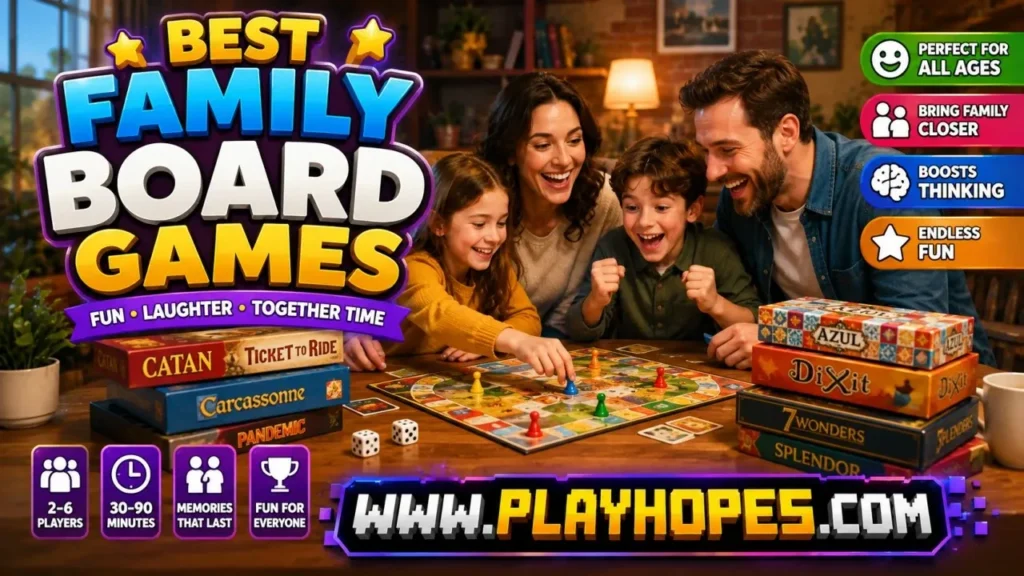
For years, this was the default. We grew up thinking that board games had to be grueling tests of patience. But here’s the thing: we are currently living in a golden age of tabletop design, and the old classics just don’t cut it anymore. The best family board games today aren’t designed to make you hate your relatives; they’re engineered to keep everyone engaged, laughing, and actually communicating.
Let me backtrack a bit. I remember when this realization first hit me. It was about eight years ago, during a particularly rainy Thanksgiving. My nieces were glued to their screens, probably playing free browser games like Style Star Match while the boys were absorbed in browser games like Police Bus Simulation. Getting them to sit down for cardboard felt like pulling teeth. I brought out a copy of Ticket to Ride. Within twenty minutes, the phones were face-down on the table. We were shouting, plotting, and trading routes. It was magic. Since then, I’ve made it my personal mission to curate the ultimate collection of family board games that actually bridge the generation gap.
Beyond the Classics: The Modern Magic of Play
So, what makes a modern tabletop experience actually work? Why do some boxes gather dust while others become the holy grail of board games for family game night? It comes down to one brilliant design shift: agency. In old-school roll-and-move games, the dice decide your fate. You are just a passive observer of your own doom. Modern fun family board games give you choices. Even when you lose, you feel like you had a say in how things went down.
Actually, that’s not quite right. It’s not just about choices; it’s about tension. A great game keeps everyone in the running until the very end. Nobody gets eliminated in the first twenty minutes to sit on the couch and watch everyone else have fun for the next two hours. (Yes, I’m looking at you again, Monopoly).
Let’s look at a few distinct categories of games that have completely transformed my family gatherings. We’ll start with the low-stress, high-laugh options and move into the deeper, brain-scratching strategies.
- The “Low Stress, High Laughs” Games: These are your gateway drafts. Quick to setup, easy to explain, and usually packed with funny moments.
- The Cooperative Brain-Teasers: Where you either win together or lose together. Excellent for families who tend to get a bit too competitive.
- The Friendly Strategy Builders: Games that let you build your own little empire without directly attacking your family members.
Our Hand-Picked Contenders for Best Family Board Games
Let’s dive into the actual boxes you should have on your shelf. I’ve personally playtested these with toddlers, moody teenagers, and grandparents who still think “WiFi” is some sort of herbal tea.
1. Ticket to Ride: The Gateway Masterpiece
If you buy only one game from this list, make it this one. It’s easily one of the best board games for families ever created. The premise is dead simple: you collect colored train cards to claim railway routes across a map. But the quiet tension of trying to connect New York to San Francisco before your brother cuts you off? Exquisite. It teaches spatial planning and basic risk management without ever feeling like an educational chore. If the kids want to keep the gaming energy going between sessions, PlayHopes offers free browser games that load instantly no download needed. But nothing truly beats holding those little plastic train cars in your hands.
2. Carcassonne: The Tile-Laying Zen Garden
Carcassonne is a game where players take turns drawing a cardboard tile and placing it to build a medieval landscape of roads, cities, and monasteries. It’s like a puzzle that you construct together, but you’re competing for points. I love this one because there’s no set board; every time you play, the map looks completely different. It’s remarkably peaceful until someone subtly sneaks their knight into your massive, nearly-finished city and steals all your hard-earned points. But even then, the building aspect is so satisfying that losing doesn’t feel like a punch to the gut.
3. Forbidden Island: Teamwork or Drowning
If your family nights often end in shouting matches, you need a cooperative game. In Forbidden Island, you are a team of adventurers trying to recover four sacred treasures from a rapidly sinking island. If the island sinks before you escape, everyone loses. This changes the dynamic entirely. Instead of scheming against each other, you’re actively cooperating, coordinating special abilities, and occasionally sacrificing your turn to save a teammate. It’s easily one of the top family board games for teaching collaboration.
The Psychology of Tabletop Play: Why We Need This
I keep coming back to this point because it’s crucial: we live in an intensely isolated digital culture. Research consistently shows that shared physical play strengthens family bonds in ways that screens simply cannot replicate. When we laugh together, read each other’s facial expressions, and react to real world events happening on a table in front of us, we create memories that stay with us far longer than any digital session. It is a collective memory making machine.
Think about it this way: when you play a physical game, you’re reading facial cues, noticing eye twitches, and sharing physical high-fives. You learn how your kids handle disappointment, how they strategize under pressure, and how they celebrate others’ victories. It’s a safe, low-stakes environment to practice being a human. That’s why investing in the best family board games isn’t just about curing boredom on a rainy Sunday it’s an investment in your family’s emotional ecosystem.
How to Host a Game Night That Doesn’t Implode
Before you run out and buy three new games, let’s talk logistics. Even the greatest game will fail if the environment is wrong. Here’s my quick, battle-tested checklist for a successful evening:
- Nail the Snacks: Avoid greasy foods. Cheetos and high-quality card sleeves do not mix. Opt for pretzels, grapes, or bite-sized chocolates.
- Read the Rules Before Game Night: Do not open the shrink wrap while everyone is sitting at the table waiting. Read the manual beforehand, watch a quick YouTube tutorial, and be ready to explain it simply.
- Embrace the House Rules (Within Reason): If a rule is making your seven-year-old cry, change it. The Board Game Police aren’t going to break down your door. The goal is connection, not strict adherence to a booklet.
Want Digital Fun Between Board Game Sessions? Try PlayHopes
When the board is packed away and you still want to keep playing, PlayHopes has free browser games ready instantly no download, no sign-up needed.
A few titles that suit the same family-friendly spirit as board games:
- Classic Chess Strategic thinking and head-to-head competition, just like your favourite board games.
- English Checkers Simple rules, deep strategy, perfect for all ages.
- Mahjong Match Relaxing tile matching that the whole family can enjoy together.
Explore the full 2 Player Games and Card Games categories on PlayHopes for more options perfect for family game nights.
Frequently Asked Questions About Family Board Games
How do I choose the right game for mixed age groups?
The sweet spot for mixed-age gaming is finding titles with simple rules but deep strategies. Games like Carcassonne work beautifully because a six-year-old can enjoy simply matching the pictures of roads and fields, while an adult can play with high-level spatial strategy. Look for games with visual, tactile components rather than heavy text reading.
Are cooperative games actually fun for adults?
Absolutely. Modern cooperative board games are not watered-down kiddie games. They feature complex AI-like card decks that simulate crises, requiring genuine teamwork, tactical discussion, and painful compromises. Winning a hard-fought game of Forbidden Island or The Crew feels incredibly rewarding for players of any age.
How can I prevent my kids from getting too competitive?
One of the best ways to soften the blow of losing is to focus on the story the game created rather than the final score. Talk about that hilarious turn where someone barely escaped, or the crazy luck of a specific card draw. By shifting the post-game conversation to the fun moments rather than the winner, you teach kids to value the experience over the trophy.
What is the ideal player count for most family board games?
While many games claim to support 2 to 6 players, the sweet spot for the best family board games is almost always 3 to 4 players. This keeps the downtime between turns short enough to prevent younger players from losing focus, while still providing enough social variety to keep the game dynamics interesting and unpredictable.
The Lasting Value of Cardboard and Dice
At the end of the day, the games we choose to bring to our tables are more than just cardboard and plastic pieces. They are catalysts. They are excuses to sit in the same room, without the distraction of notifications and work emails, and simply exist together. So, put away the dusty, frustrating relics of the past. Grab something new, pour some drinks, gather your favorite humans, and let the chaos unfold.